जातस्य हि ध्रुवो मृत्युर्ध्रुवं जन्म मृतस्य च।
तस्मादपरिहार्ये ऽर्थे न त्वं शोचितुमर्हसि॥
जो जन्म घेतो त्याचा मृत्यू निश्चित असतो आणि जो मरतो त्याचा जन्म निश्चित असतो; म्हणूनच जे अपरिहार्य आहे त्याबद्दल तुम्ही शोक करू नये.
Contact Us
VIEW SERVICES
जातस्य हि ध्रुवो मृत्युर्ध्रुवं जन्म मृतस्य च।
तस्मादपरिहार्ये ऽर्थे न त्वं शोचितुमर्हसि॥
जो जन्म घेतो त्याचा मृत्यू निश्चित असतो आणि जो मरतो त्याचा जन्म निश्चित असतो; म्हणूनच जे अपरिहार्य आहे त्याबद्दल तुम्ही शोक करू नये.
Contact Us
VIEW SERVICES
We Hindus believe In the Moksha.
We Hindus believe that the Vedas transcend all time and don’t have a beginning or an end.
About Us
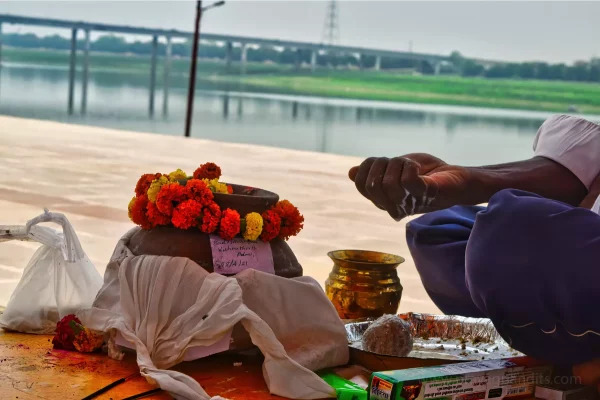
Moksha Nashik is formed to help Hindus, perform the last ritual of their deceased family member in the right procedure written in holy books ( shastras ). It is the common belief of Hindus that if last rites are performed in the right procedures, will help to attain Moksha or salvation for the diseased person. The process is performed under the guidance of learned Acharyas having complete knowledge of the process, written in Hindu Holy books like GARUD PURAN and SMRITI SASTRA.
MOKSHA is functioning in the city that have great importance according to Hindu mythology, for performing the after-death rituals. We are there to help all those pilgrims who want to visit-

for Pind Daan, Asthi Visarjan and other related activities. We aim to offer services to the Hindus from all corners of the world under the expert guidance of learned and knowledgeable Acharyas.
Rituals as Vedic Shastra
In Hinduism we come across a common method of worship called puja or pooja. Unlike the elaborate sacrificial ceremonies, it can be performed by anyone except those who have incurred impurity due to menstruation or the death of a family member, etc. As the most popular form of worship, "puja" is practiced in almost every Hindu household even today, either every day, occasionally on certain days in a week or month, or on important religious, auspicious or festive occasions as required by tradition. A puja can either be a simple ritual worship or a very complicated one, depending upon the way it is performed. One may perform it to overcome a problem, seek divine help, or just to render devotional service to the family deities. For many people, puja is part of the daily sacrifice (nitya karma).
After that, the idol is bathed with water, milk, honey, etc., and massaged with various perfumes and scented pastes such as turmeric powder, sandal paste and curd mixed with ghee to the accompaniment of various mantras which usually end with “samarpayami,” meaning, “I have offered.” After the bathing ceremony, the deity is offered new clothes to wear during the ceremony, which is symbolically represented either by a peace of cotton thread in simple ceremonies or real clothes in more organized ones.
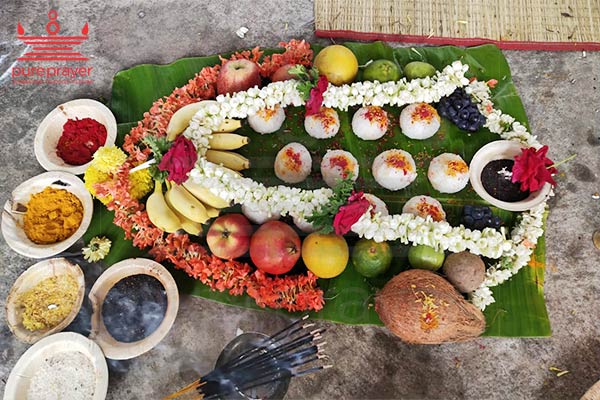
In more elaborate ceremonies of Hinduism, which may last for one more days, the deity is entertained with songs, music and dance, and on occasions taken out in a public procession. He is also made a number of customary offerings and gifts such as clothes, incense, flowers, perfumes, light, ornaments, food items, money, etc. These offerings may be real or imaginary. Both approaches are valid. Their purpose is to express one’s gratitude, devotion, love and surrender.